Cut Your Electricity Bill by 40–60% — Starting Month One
Grid-tie solar is the fastest-payback commercial solar option available. Your panels generate power during the day, your building uses it first, and anything unused feeds back to Eskom — spinning your meter backwards.
Eskom Tariffs Are Rising Faster Than Inflation
The average commercial Eskom tariff has increased over 12% per year for the last decade. Your electricity bill this year is already 12% higher than last year — and next year will be worse. Grid-tie solar breaks that cycle permanently.
Commercial electricity now costs R2.50–R3.50/kWh on Eskom tariffs
Solar generation costs as little as R0.60–R0.80/kWh over the system lifetime
Section 12B tax incentive lets you write off 100% of the system cost in year one
No batteries means lower capital cost and faster break-even
How Grid-Tie Solar Works for Your Business
We install solar panels on your roof or carport. A grid-tied inverter converts the DC power to AC and feeds it directly into your building's distribution board. Your business consumes solar power first — reducing what you buy from Eskom in real time.
Typical reduction in daytime electricity costs
Typical payback period for commercial systems
Panel performance warranty
Section 12B tax deduction in year one
How It Works
Solar panels on your roof capture sunlight during business hours
Grid-tied inverter converts DC to AC and synchronises with Eskom supply
Your building uses solar power first — Eskom only tops up the difference
During load shedding, the system safely shuts down (add a battery to stay on)
Smart monitoring lets you track generation and savings in real time
Case Study
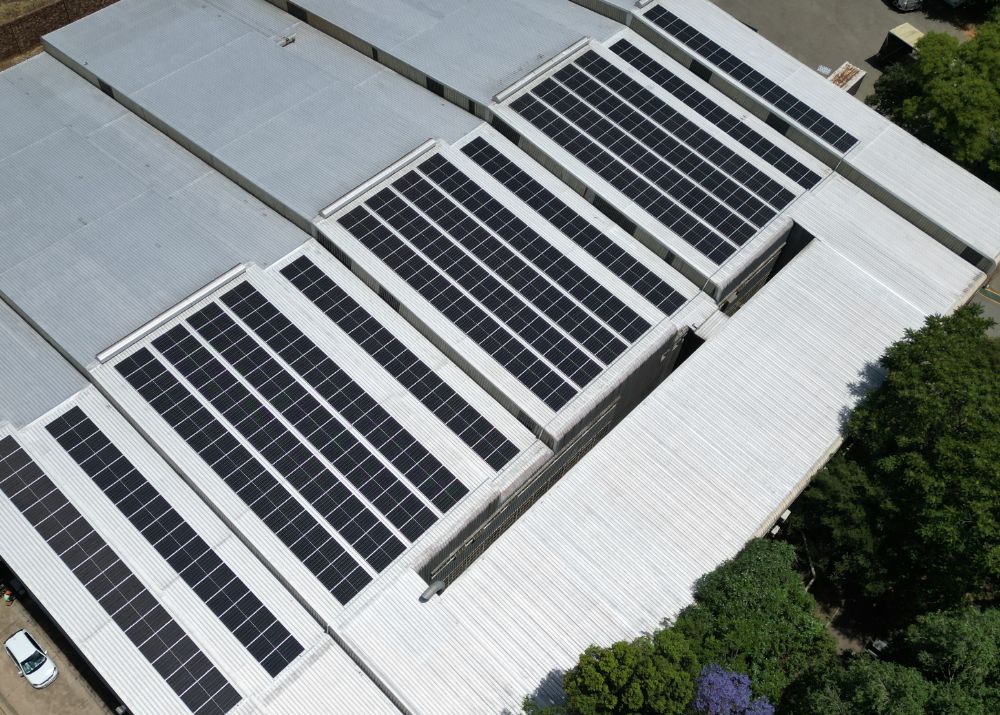
Investicore — Mandoval
Pretoria
178 kWp Grid-Tie
Estimated 40–55% reduction in daytime electricity costs across the commercial property.
Multiple Ways to Finance Your System
Most of our clients achieve positive cash flow from month one — the savings exceed the finance repayment.
Section 12B
Write off 100% of the full system cost in year one — effectively reducing your net cost by 27% at 27% corporate tax.
Asset Finance
Spread payments over 3–5 years with a bank or specialist solar financier. Many clients achieve positive cash flow from month one.
Cash Purchase
Highest ROI over the system lifetime. Typical payback 3–5 years on a 25-year asset.
Common Questions
Does grid-tie solar work during load shedding?
No — standard grid-tie inverters shut down when Eskom supply is lost, for safety reasons. If load shedding resilience is critical, we recommend adding a battery or generator integration. We can design a hybrid system from the start.
How large a system do I need?
We size systems based on your actual electricity bills and consumption profile. A 100 kWp system typically generates 130,000–150,000 kWh per year in Gauteng and suits businesses spending R40,000–R80,000/month on electricity.
What happens to surplus generation?
Surplus power can feed back to Eskom under net-metering (if your municipality allows it) or simply reduce your import. We'll advise on the best approach for your tariff and local utility.
How long does installation take?
A typical 100–200 kWp commercial installation takes 2–4 weeks from council approval. We handle all permitting, COC certificates, and Eskom/municipality grid-connection paperwork.
What maintenance is required?
Very little. We recommend an annual inspection and panel cleaning. We offer maintenance contracts that include monitoring, cleaning, and inverter health checks.
See Exactly What Grid-Tie Solar Could Save Your Business
Our engineers will review your electricity bills, site, and goals — then produce a detailed savings and ROI report at no cost and no obligation.
Typical response within 24-48 business hours.