Run Your Business on Solar — Day and Night, Regardless of Load Shedding
A hybrid solar and battery system gives your business complete energy independence. Solar charges your batteries during the day; you draw from batteries at night and during load shedding. Eskom becomes your backup, not your primary supplier.
Load Shedding Is Costing Your Business More Than You Think
Stage 6 load shedding means up to 12 hours without power per day. For businesses that can't stop — factories, cold storage, medical, hospitality, data centres — every outage has a direct rand value. Battery backup eliminates that cost entirely.
Stage 6 load shedding: up to 12 hours of power cuts per day
Production stoppages, spoilage, data loss, client penalties — all avoidable
Battery systems eliminate load shedding downtime completely
Combined with solar, you can reduce Eskom consumption by 70–90%
How Hybrid Solar + Battery Works
Lithium battery banks (typically LiFePO4) store excess solar energy during the day. When load shedding starts or at night, your building switches seamlessly to battery power. The solar system simultaneously charges the batteries and powers your building.
Reduction in Eskom consumption
Downtime during load shedding
Battery cycle life (LiFePO4)
Section 12B tax deduction on solar components
How It Works
Solar panels generate power and simultaneously charge battery banks
Excess solar energy is stored in batteries for use after hours
During load shedding, the system seamlessly switches to battery — no interruption
When batteries are low, the system intelligently imports from Eskom to top up
A smart energy management system optimises when to charge, discharge, and export
Case Study
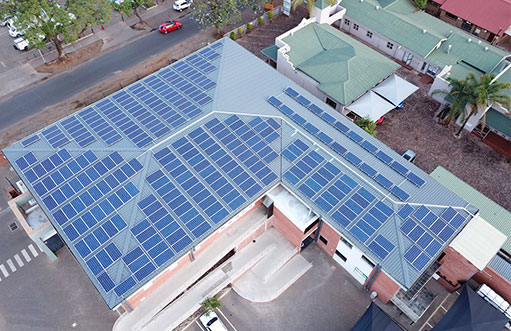
Pretoria North Medical Centre
Pretoria North
93 kWp + 200 kWh Battery
Continuous power through all stages of load shedding. Significant reduction in electricity costs for a critical healthcare facility.
Multiple Ways to Finance Your System
Most of our clients achieve positive cash flow from month one — the savings exceed the finance repayment.
Section 12B
Solar panels and inverters qualify for 100% deduction. Battery systems may qualify depending on how they are integrated.
Asset Finance
Larger capital cost than grid-tie — but higher monthly savings justify longer finance terms of 5–7 years.
PPA (Power Purchase Agreement)
Pay per kWh generated — no upfront capital required. We own and maintain the system.
Common Questions
How long will batteries last during load shedding?
This depends on your battery bank size and critical load. We size batteries to your specific needs. A 200 kWh battery bank typically provides 4–8 hours of full operation for a medium commercial building, depending on consumption.
What battery chemistry do you use?
We install LiFePO4 (lithium iron phosphate) batteries — the safest, most stable lithium chemistry available. They have a 10+ year cycle life, are non-flammable, and maintain performance over thousands of charge cycles.
Can I start with solar and add batteries later?
Yes — we recommend this approach for many clients. We design the solar system to be battery-ready from day one, so adding batteries later is a straightforward upgrade without replacing existing equipment.
Does the system work completely off-grid?
Our hybrid systems are designed to work with the grid as a backup, not fully off-grid. True off-grid requires significantly larger battery banks and generator backup. For most commercial properties, grid-connected hybrid delivers better economics.
What happens if it's overcast for several days?
During extended cloudy periods, the system automatically imports from Eskom to supplement. You're never left without power — the grid is always there as a backup. Our energy management systems optimise this automatically.
See Exactly What Solar + Battery Backup Could Save Your Business
Our engineers will review your electricity bills, site, and goals — then produce a detailed savings and ROI report at no cost and no obligation.
Typical response within 24-48 business hours.